When the world talks about Luther Vandross, conversations gravitate toward eight Grammy Awards, 40 million records sold worldwide, and a voice so smooth it earned the nickname“The Velvet Voice.”
But behind that legendary story is a quieter one — the story of the older brother who helped hold the family together, encouraged a young Luther from the sidelines, and chose a life of dignity and privacy over fame.
Charles Anthony Vandross may not be a household name, but his influence on one of music’s greatest careers was real, and his story is worth telling in full.
Quick Bio
| Attribute | Details |
| Full Name | Charles Anthony Vandross |
| Date of Birth | February 7, 1947 |
| Birthplace | Manhattan, New York City, USA |
| Date of Passing | April 30, 1991 |
| Age at Death | 44 years old |
| Nationality | American |
| Ethnicity | African American |
| Father | Luther Vandross Sr. |
| Mother | Mary Ida Shields Vandross |
| Siblings | Luther Vandross, Patricia Marie Vandross Joyner, Ann D. Vandross Sanders |
| Known For | Older brother of Luther Vandross |
| Career | Private — not in entertainment |
| Net Worth | Not publicly confirmed |
Early Life and Family Background
Charles Anthony Vandross was born on February 7, 1947, in Manhattan, New York City, into a family where music was not just a hobby but a way of life. He grew up in a warm, close-knit household alongside his siblings — Patricia Marie, Ann D., and the youngest, Luther — in a home shaped by African American traditions, gospel faith, and community values.
His father, Luther Vandross Sr., was an upholsterer by trade but a singer by nature. He brought music into the household through song, performance, and an infectious love for melody that shaped every child under that roof. His mother, Mary Ida Shields Vandross, worked as a licensed practical nurse. She was the emotional anchor of the family — disciplined, loving, and deeply committed to her children’s wellbeing.
Growing up in New York City during the 1950s meant being surrounded by one of the most vibrant cultural environments in the world. Soul, gospel, R&B, and the energy of Harlem’s music scene were everywhere. That backdrop made music feel natural rather than aspirational in the Vandross home — it was simply part of how the family existed together.
Age and Generational Context
Charles Anthony Vandross was born in 1947, placing him four years ahead of his younger brother Luther, who was born on April 20, 1951. Charles was part of the post-World War II generation — a cohort shaped by the Civil Rights Movement, the transformation of American popular music, and the social upheaval of the 1960s.
He passed away on April 30, 1991, at the age of 44. This means Charles never witnessed the full peak of Luther’s international fame — he died before Luther’s legendary 1991 album Power of Love and long before the 2003 release of “Dance With My Father,” the Grammy-winning song Luther dedicated to the memory of their late father. Had Charles lived to 2026, he would have been 79 years old.
Physical Appearance
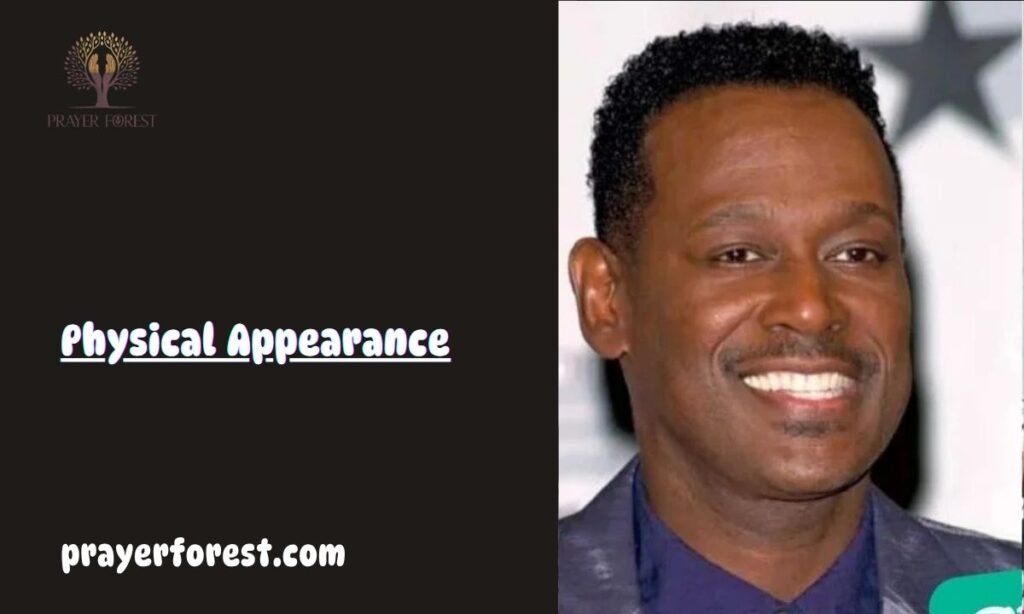
Very little is publicly documented about Charles Anthony Vandross’s physical appearance. He lived a deeply private life, avoided cameras and public events, and left behind no known professional photographs or media appearances. As a result, no credible source provides verified descriptions of his height, weight, or detailed physical characteristics.
What is consistently noted across biographical sources is that he carried himself with quiet dignity and a calm, grounded presence that those around him found reassuring. His character, rather than his appearance, is what defined him in the eyes of family and those who knew him.
The Impact of Their Father’s Death (1959)
In 1959, when Charles was just 12 years old, his father Luther Vandross Sr. died from complications related to diabetes. Luther Jr. was only 8. This loss changed the family’s dynamics permanently and placed enormous responsibility on Charles as the eldest son in the household.
With their mother working as a nurse to provide for four children, Charles stepped into a role that went far beyond typical sibling responsibilities. He became a stabilizing presence — a secondary father figure who helped maintain order, provided emotional support, and created a sense of security for his younger siblings during a period of profound grief and adjustment.
This early experience of loss and responsibility shaped Charles’s entire personality. It taught him the value of quiet strength, practicality over self-promotion, and loyalty to family above all else. Those who knew him later in life consistently describe someone defined by exactly those qualities.
Charles Anthony Vandross and Music
Although Charles Anthony Vandross did not pursue a professional music career, music was undeniably part of his world from the very beginning. The Vandross household was filled with gospel hymns, soul records, and the kind of musical conversation that shapes a child’s relationship with sound and expression.
Charles participated in early music-related activities with his siblings, particularly in community and family settings. He was part of the environment that made music feel accessible and natural to young Luther — not something reserved for the gifted few, but something every member of the family was connected to in their own way.
He experienced music as a shared family language rather than a career pathway. That distinction is important. Not every person surrounded by extraordinary talent feels compelled to pursue it professionally. For Charles, music was something he lived with and celebrated rather than something he sought to perform.
Relationship with Luther Vandross
The bond between Charles and Luther Vandross was rooted in shared experience, mutual respect, and the unspoken understanding that comes from growing up in the same home through both joy and hardship.
As an older brother, Charles witnessed Luther’s earliest signs of musical talent and appears to have encouraged rather than competed with it. Luther showed remarkable ability from an extraordinarily young age — teaching himself to play piano by ear at age three, winning school talent shows, and absorbing everything the New York music scene had to offer.
Rather than feeling overshadowed or envious, Charles created space for his younger brother to discover and develop that gift. Luther later credited his family — particularly his mother — as the emotional foundation of his career, but Charles’s quiet presence formed part of that same foundation.
Role in Luther’s Early Career
One of the most concrete connections between Charles and Luther’s early career comes through the group “Listen My Brother.” This was a workshop group based at the Apollo Theater in Harlem that performed in community settings and at cultural events. Luther, along with other members, performed with the group in front of tens of thousands at the Harlem Cultural Festival in 1969.
Shortly after, the group appeared in the pilot episode and other early episodes of Sesame Street during 1969 and 1970 — one of the first children’s television programs to feature diverse, culturally rich content for young audiences.
Charles’s involvement in these early community and performance activities alongside his younger brother reflected his genuine support for Luther’s artistic development. These were not ambitions of his own — they were acts of brotherhood.
Charles Anthony Vandross’s Own Career Path
Charles Anthony Vandross did not work in the entertainment industry in any professional or sustained capacity. His career path led him into traditional, private lines of work that allowed him to provide for his family financially and emotionally. While specific professional details are not documented in any public record, family accounts describe him as a hardworking and principled man.
His choice to avoid entertainment was not a failure of opportunity — it was a deliberate preference. He valued stability and private achievement over celebrity and public recognition. In many ways, that choice was itself a form of strength.
Personal Life — Marriage, Children, and Privacy
Charles Anthony Vandross kept his personal life entirely private. No verified public records confirm details about his marital status, romantic relationships, or whether he had children. He did not give interviews, appear in media, or share personal information with the public at any point during his lifetime.
This level of privacy was consistent with his broader approach to life. He saw no obligation to share his personal story simply because his younger brother was famous — and he honored that belief completely and without apparent regret.
Relationships with Siblings
The Vandross siblings — Charles, Patricia Marie Vandross Joyner, Ann D. Vandross Sanders, and Luther — grew up in a home defined by unity and shared challenge. After their father’s death, the bonds between them deepened out of necessity. Their mother Mary Ida was the unifying force, but Charles played his own cohesive role as the eldest.
- Patricia Marie Vandross Joyner — Charles’s sister, who maintained a private life throughout
- Ann D. Vandross Sanders — Another sister who similarly avoided public attention
- Luther Vandross — The youngest sibling, whose extraordinary talent Charles encouraged from childhood
Across all four siblings, a shared preference for privacy and family loyalty appears to have been the strongest common thread — a value clearly instilled by both parents.
The Vandross Family Legacy
The Vandross family represents something meaningful in American music history — not just because Luther became a global star, but because the foundation that produced him was one of genuine love, musical immersion, and collective resilience. Mary Ida Vandross worked tirelessly after her husband’s death and remained a source of inspiration until her own passing in 2008 at the age of 82.
Luther himself honored that legacy publicly through his music. His 2003 song “Dance With My Father,” which won the Grammy Award for Song of the Year, was a direct tribute to Luther Vandross Sr. and to the family’s shared memory of a man who left them too soon. In that song, Charles’s generation of loss and love is heard between every note — even if his name is never spoken.
Life After Luther Vandross’s Passing (2005–Now)
Charles Anthony Vandross passed away on April 30, 1991 — fourteen years before his younger brother Luther, who died on July 1, 2005, following a stroke he suffered in 2003. Charles therefore never witnessed either Luther’s global peak of fame in the late 1990s and early 2000s, or his passing.
The surviving family members, including sisters Patricia and Ann, have maintained the same commitment to privacy that defined the family throughout. Luther’s estate has continued to manage his musical legacy, with his recordings remaining widely celebrated and his influence on R&B consistently acknowledged by artists across generations.
Net Worth and Financial Overview 2026
| Attribute | Details |
| Charles Anthony Vandross Net Worth | Not publicly confirmed |
| Career Type | Non-entertainment, private employment |
| Financial Records | No public documentation |
| Luther Vandross’s Estate Value | Estimated in millions (managed posthumously) |
| Family Financial Standing | Not publicly disclosed |
Charles Anthony Vandross’s personal finances were never the subject of public reporting. Given his private career outside the entertainment industry and his sustained avoidance of media attention, no credible estimate of his net worth exists. His life was not one built around wealth accumulation or financial visibility — it was built around family, loyalty, and quiet daily purpose.
Legacy, Influence, and Cultural Importance
Charles Anthony Vandross’s legacy is not measured in awards, recordings, or headlines. It is measured in the kind of influence that never gets photographed — the steady older brother who helped hold a grieving family together, who stood beside his younger sibling at community performances, who never once tried to trade on the Vandross name for personal gain.
His life offers a different but equally valid model of contribution. Not every person connected to greatness needs to seek greatness themselves. Some of the most important figures in any successful person’s story are the ones who created the conditions for success — and then stepped back without asking for credit.
Charles Anthony Vandross was exactly that kind of person, and that is precisely why his story continues to matter.
Public Perception and Media Presence
Charles Anthony Vandross had no public profile during his lifetime and has no social media presence, no verified biography website, and no documented interviews in any media outlet. His name appears exclusively in the context of biographical research into Luther Vandross and the Vandross family history.
Online interest in Charles has grown steadily as fans of Luther Vandross seek to understand the full story of the man behind the music. That curiosity is natural — great artists rarely emerge in isolation, and the family stories behind them often reveal as much as the music itself.
Conclusion
Charles Anthony Vandross lived a life that most people in proximity to fame never choose: one of genuine privacy, family loyalty, and self-effacing support for those he loved. He was born into a musical household, shaped by loss, strengthened by responsibility, and defined by an unwillingness to let anyone else’s fame define his own value.
His younger brother Luther gave the world some of the most beautifully crafted love songs in the history of popular music. Behind that voice was a family — and within that family was a big brother who helped make the environment for that talent possible. Charles Anthony Vandross may not have stood in the spotlight, but his presence in the wings mattered deeply. His story is a reminder that the most important contributions to great lives are often the quietest ones.
Frequently Asked Questions
Who is Charles Anthony Vandross?
Charles Anthony Vandross is the older brother of legendary R&B singer Luther Vandross, born on February 7, 1947, in Manhattan, New York.
When did Charles Anthony Vandross pass away?
He passed away on April 30, 1991, at the age of 44, more than a decade before his younger brother Luther.
Did Charles Anthony Vandross have a music career?
He did not pursue a professional music career, though he participated in early community performances alongside Luther, including activities connected to the group “Listen My Brother.”
Who were Charles Anthony Vandross’s parents?
His parents were Luther Vandross Sr., an upholsterer and singer who died in 1959, and Mary Ida Shields Vandross, a licensed practical nurse who raised four children on her own.
Did Charles Anthony Vandross appear on Sesame Street?
He was part of the environment surrounding Luther’s early career, which included appearances on the original Sesame Street in 1969–1970, though Charles’s individual involvement in those appearances is not separately confirmed.
Who are Charles Anthony Vandross’s siblings?
His siblings were Luther Vandross, Patricia Marie Vandross Joyner, and Ann D. Vandross Sanders.
What is Charles Anthony Vandross’s net worth?
No verified public records confirm his net worth, as he lived and worked entirely outside of public view.
Why is Charles Anthony Vandross relatively unknown?
He deliberately avoided public attention throughout his life and never sought recognition through his connection to his famous younger brother.

Robert Hugh Benson shares inspiring Bible verses and faith-filled reflections on Prayer Forest to guide readers toward peace, hope, and prayer.