
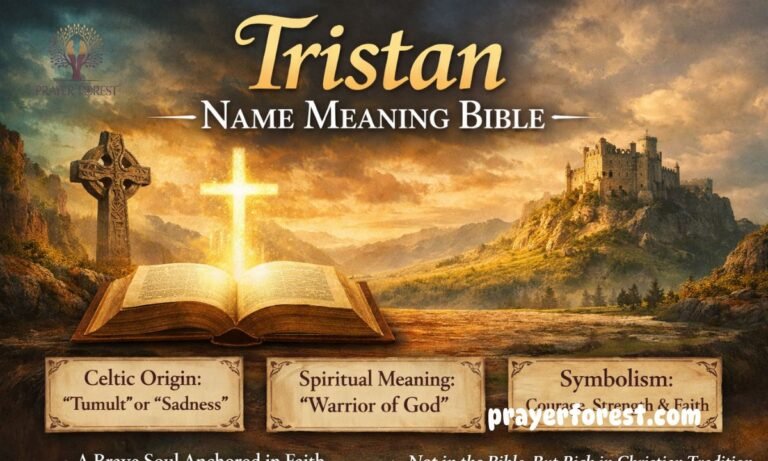
Names carry power. They shape identity, reflect purpose, and connect us to something greater than ourselves. The name Tristan is no exception. It holds a rich history rooted in both ancient culture and spiritual symbolism. Many parents today are drawn to this name not just for its sound, but for its deep and meaningful background.
In the Bible, names are taken seriously. God gave names with intention. From Adam to Abraham, from Jacob to Israel, a name was a declaration of destiny. While Tristan does not appear directly in the Bible, its spiritual qualities align closely with biblical values. This article explores every layer of meaning behind the name Tristan and reveals why it continues to resonate with believers around the world.
What Does the Name Tristan Mean?
The name Tristan is associated with courage, emotional depth, and quiet strength. Its most widely accepted root comes from the Latin word Triste, meaning sorrowful. But over centuries, the meaning evolved far beyond sadness.
Spiritually, Tristan came to represent someone who faces hardship with grace. It describes a person who does not run from difficulty. Instead, they walk through it with integrity and faith. In a biblical context, this mirrors the stories of Joseph, Daniel, and David — men who suffered greatly yet remained loyal to God.
Tristan is not a weak name. It carries the weight of someone who has endured and emerged stronger. That journey from sorrow to resilience is a powerful spiritual story on its own.
Etymology and Historical Origins of Tristan
The name Tristan has roots in both Latin and Celtic traditions. The Latin form, Triste, gave the name its earliest meaning of sorrow. The Celtic form, often spelled Drustan or Drust, was used in early Breton and Scottish cultures. It appeared in heroic tales of knights and warriors.
The name became widely known through the medieval romance of Tristan and Isolde. This story celebrated love, loyalty, and sacrifice. Tristan was portrayed as a noble knight with deep honor and moral courage. Over time, the name shed its association with sadness and became a symbol of heroism.
| Period / Culture | Origin / Meaning | Key Notes |
| Latin | Triste – Sorrowful | Earliest root; linked to sadness in medieval texts |
| Celtic / Breton | Tristan / Drustan | Popular in Celtic legends; tied to heroic tales |
| Medieval Europe | Tristan and Isolde | Famous chivalric romance symbolizing loyalty |
| Christian Symbolism | Spiritual Resilience | Represents faith, endurance, and moral strength |
| Modern Usage | Tristan | Emphasizes heroism and emotional depth |
This historical journey mirrors the spiritual path many believers walk. Sorrow becomes strength. Trials become testimonies. That is the essence of Tristan.
Is Tristan Mentioned in the Bible?
Tristan does not appear directly in the Bible. It is not the name of any prophet, apostle, king, or servant of God recorded in scripture. Its origins are Latin and Celtic, not Hebrew or Greek.
However, the absence of a name from scripture does not remove its spiritual value. The Bible is filled with principles that Tristan’s meaning reflects perfectly. God calls His people to be courageous (Joshua 1:9). He calls them to be loyal (Proverbs 17:17). He calls them to persevere through trials (James 1:2-4).
Tristan embodies all of these qualities. In that sense, it is a deeply biblical name in spirit, even if not in text. A name does not have to appear in scripture to carry divine meaning.
Spiritual Significance of the Name Tristan
The spiritual significance of Tristan is woven through every layer of its history. From its roots in sorrow to its evolution into heroism, the name tells the story of a soul that trusts God through difficulty.
Christians believe that trials refine character. The Bible says in Romans 5:3-4 that suffering produces perseverance, and perseverance produces character. Tristan is a name that embodies that entire process.
Those who bear this name are often seen as emotionally deep and spiritually aware. They tend to feel things deeply, love loyally, and act with quiet but firm conviction. These are not small gifts. They are qualities shaped by faith and tested by fire.
Christian Symbolism and Faith Connections
Tristan connects naturally to several Christian virtues celebrated throughout the Bible.
- Perseverance Through Trials — Like Joseph who was sold into slavery and rose to save a nation, Tristan represents endurance and faithfulness in dark seasons.
- Loyalty and Commitment — Like Jonathan who stood by David even at personal cost, Tristan reflects steadfast devotion to God, family, and truth.
- Emotional Depth and Compassion — The sorrowful roots of Tristan become empathy. A person who has known pain understands others better and loves more deeply.
- Courage and Heroism — God commanded Joshua to be strong and courageous. Tristan carries that same call to brave action rooted in faith.
- Guidance and Purpose — Tristan symbolizes a life open to God’s direction, willing to be led and shaped by divine will.
Each of these connections points to a rich spiritual identity. Tristan is not just a name. It is a calling.
Tristan in Biblical History and Tradition
Though Tristan is absent from biblical text, its qualities echo loudly through biblical history. The Bible is full of characters who walked through sorrow and came out stronger. Their stories carry the same spiritual DNA as the name Tristan.
Joseph endured betrayal, slavery, and prison. He never gave up. Daniel faced a lion’s den and a corrupt empire. He prayed anyway. David was anointed as king but hunted like a criminal for years. He clung to God in every valley.
Tristan mirrors these journeys. It is a name that says I will not be broken. I will trust God in the storm. That is a profound biblical tradition carried forward in a single name.
The Origin of Tristan in Celtic and Christian Culture
Tristan’s roots in Celtic culture gave it a heroic and noble reputation long before it entered Christian symbolism. In Celtic legends, Tristan was a warrior figure admired for bravery, loyalty, and steadfast love.
As Christianity spread through Europe, Celtic names and stories were reinterpreted through a spiritual lens. Medieval Christian writers saw in the legend of Tristan a reflection of the soul’s journey toward God.
- Celtic Legends — Tristan was a knightly figure celebrated for loyalty, noble love, and fierce courage.
- Medieval Romance — The tale of Tristan and Isolde shaped the cultural understanding of honor and sacrifice.
- Christian Symbolism — The name came to represent faithfulness, endurance through hardship, and moral strength.
- Spiritual Inspiration — Today, Tristan inspires qualities like courage, compassion, and steadfastness in Christian life.
Biblical Names Similar to Tristan
Several biblical names carry the same spiritual qualities that define Tristan. If you love Tristan for its meaning, these names may resonate with you as well.
- David — Beloved leader who embodied bravery, loyalty, and moral strength even in his failures.
- Daniel — Steadfast in faith under intense pressure. He never compromised his relationship with God.
- Jonathan — The definition of loyal friendship. He honored his commitments at great personal cost.
- Joseph — Overcame betrayal and suffering to fulfill God’s purpose with integrity and grace.
- Elijah — A courageous prophet who stood alone for God when the whole nation had turned away.
These names share Tristan’s spiritual DNA. Each reflects the journey from trial to triumph through faith in God.
Why Parents Choose Tristan: A Biblical Perspective?
Christian parents think carefully about names. They want a name that reflects faith, virtue, and hope for their child’s future. Tristan meets all of those criteria beautifully.
Parents choose Tristan because it speaks of strength forged through hardship. It suggests a child who will face life’s difficulties with faith and resilience. It also carries a timeless quality that will not feel dated in twenty years.
In a biblical sense, choosing Tristan is a declaration of the kind of character a parent hopes to nurture — courageous, loyal, faithful, and spiritually grounded.
Tristan Name Meaning in Hebrew and Greek
The Bible was written primarily in Hebrew and Greek. Looking at Tristan through these linguistic lenses adds another layer of spiritual insight.
Tristan in Hebrew Context
In Hebrew tradition, names reveal character and divine purpose. There is no direct Hebrew translation for Tristan, but its qualities align with powerful Hebrew names. Daniel, meaning God is my judge, reflects Tristan’s theme of trusting God through trials. David, meaning beloved, reflects the loyalty and moral courage at the heart of Tristan’s identity.
Tristan in Greek Context
Greek names in the New Testament emphasize virtue, purpose, and devotion to God. Tristan’s themes match names like Timothy, meaning honoring God, and Theodore, meaning gift of God. The Greek spiritual tradition would see in Tristan someone called to live with honor, courage, and divine purpose.
The Cultural and Religious Impact of the Name Tristan
Cultural Influence
Tristan has left a lasting mark on European culture. The legend of Tristan and Isolde inspired countless works of literature, opera, and art. Across France, England, and beyond, parents chose this name for children they hoped would grow up to be honorable and strong. The cultural weight of Tristan carries real dignity and grace.
Religious and Spiritual Influence
In Christian communities, Tristan has been embraced as a name that reflects core spiritual values. It represents the faithful servant who does not quit.
- Faithfulness and Perseverance — Echoing the resilience celebrated in biblical heroes like Job and Paul.
- Moral Integrity and Courage — Matching the call of God to stand firm in righteousness.
- Compassion and Emotional Depth — Transforming a history of sorrow into empathy, service, and love for others.
What the Bible Teaches About Names and Identity?
The Bible takes names seriously. From the very beginning, God named what He created. A name in scripture was never just a label. It was a declaration. It carried expectation and meaning. It shaped how a person saw themselves and how others saw them.
Key Biblical Lessons About Names
- Names Reflect God’s Purpose — God named Isaac to signify joy and fulfilled promise.
- Names Indicate Character — David’s name meaning beloved spoke of a man after God’s own heart.
- Names Transform Identity — God changed Abram to Abraham and Jacob to Israel to mark new divine callings.
- Names Connect Generations — Biblical names preserved heritage, faith, and the ongoing story of God’s people.
Application to Modern Names Like Tristan
Modern names like Tristan carry the same responsibility. When a parent names their child Tristan, they are planting seeds of courage, loyalty, and spiritual depth into that child’s identity. The name becomes a daily reminder of who that child is called to be. Even without a direct biblical reference, Tristan speaks the language of faith and purpose.
Frequently Asked Questions
What does the name Tristan mean in the Bible?
Tristan is not in the Bible directly, but it spiritually represents courage, loyalty, perseverance, and resilience — all deeply biblical values.
Is Tristan a Christian name?
Tristan is not of biblical origin but is widely accepted in Christian culture. Its virtues align with Christian faith and many believers choose it with spiritual intent.
What is the spiritual meaning of Tristan?
Spiritually, Tristan means strength through sorrow, endurance through trials, and faithful perseverance in trusting God every season.
What biblical names are similar to Tristan?
Names like David, Daniel, Jonathan, Joseph, and Elijah share Tristan’s spiritual qualities of courage, loyalty, and faithfulness.
Why do Christian parents choose the name Tristan?
Christian parents choose Tristan for its timeless strength, spiritual symbolism, and virtues that mirror the character of biblical heroes.
Conclusion
The name Tristan carries far more than its Latin roots suggest. What began as a word for sorrow became a symbol of strength, loyalty, and spiritual endurance. Its journey through Celtic legend, medieval romance, and Christian culture has shaped it into a name with real depth and divine resonance.
Though Tristan does not appear in scripture, it lives and breathes the values that scripture celebrates. Courage, perseverance, compassion, integrity — these are the marks of the faithful. These are the marks of Tristan.
If you are considering this name for your child, know that you are giving them a name with centuries of meaning behind it. You are planting a declaration of who they can become. In a world that often rewards the shallow, a name like Tristan calls its bearer to something deeper, something lasting, and something eternal.

Robert Hugh Benson shares inspiring Bible verses and faith-filled reflections on Prayer Forest to guide readers toward peace, hope, and prayer.